Sustainable Home
A home has always been a place of comfort. A space to return to, to rest, to simply be.
But slowly, the idea of home begins to feel deeper than that.
Not just a structure that holds us—but a space that responds to how we live within it.
There’s a quiet shift in perspective when we begin to notice the relationship between our homes and the world outside.
The light that enters through a window, the air that moves through a room, the way a space feels without needing to force it into comfort.
It starts to feel less about control… and more about connection.
Sustainable living at home doesn’t arrive with dramatic change. It settles in gently.
In the choice to let natural light do its work.
In the awareness that not every corner needs to be filled, not every space needs to be expanded.
A kind of calm that comes from simplicity.
And with that, a new way of thinking begins to take shape.
Can comfort exist without constant consumption?
Can the spaces we build today quietly adapt to the needs of tomorrow?
These questions don’t demand immediate answers—they invite reflection.
Because a sustainable home is not defined by how advanced it looks, but by how thoughtfully it exists.
It’s not about adding more—it’s about understanding what truly matters within a space.
The materials, the design, the layout… they all begin to carry intention.
Not just for how they serve us now, but for how they continue to exist over time.
And then there’s the way we live inside it.
The small habits. The everyday choices.
The unnoticed patterns that slowly shape the environment around us.
A home begins to reflect not just our lifestyle—but our awareness.
Because in the end, a home is never just about shelter.
It’s about the kind of life it supports.
And maybe the real shift happens when we stop asking how much a home can give us—
and start asking how gently it can exist alongside everything else.
Is your home simply holding your life…
or is it quietly shaping the future you’re living into?
Most people believe a sustainable home is simply about using traditional materials or older construction techniques. But is that really the full picture?
Not quite.
A truly sustainable home goes far beyond how it’s built—it’s about how it functions, how it adapts, and how it sustains itself every single day.
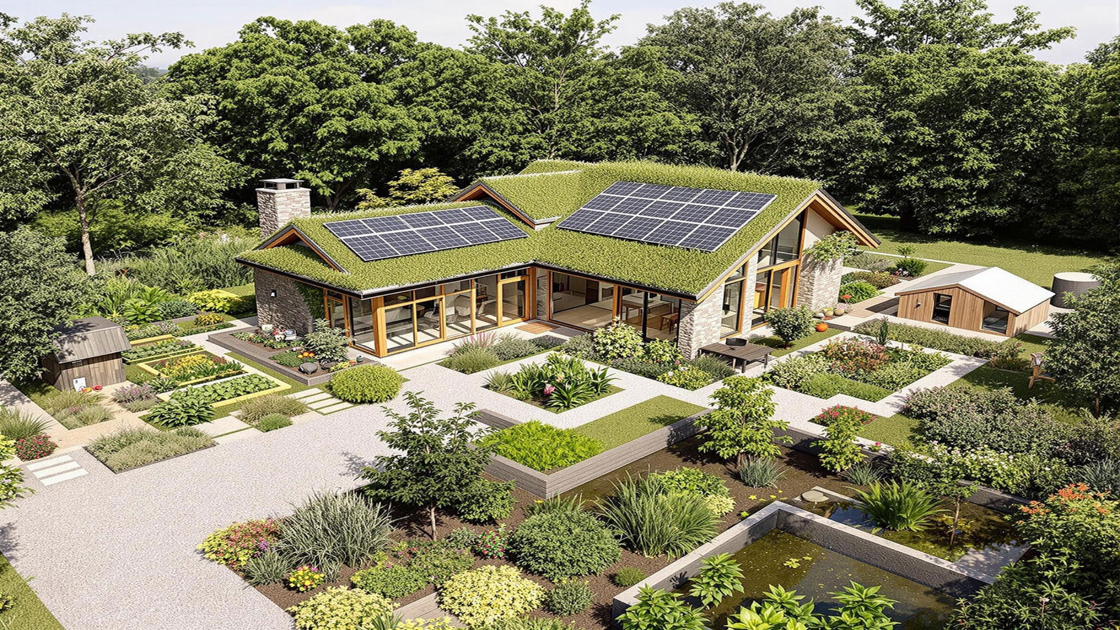
It’s not just a structure—it becomes a self-sustaining ecosystem. One that reduces dependence on external resources while remaining deeply connected to the environment around it.
It’s not just about building differently—it’s about living differently.
And yes, in a hyper-connected world, the internet might still remain the one exception.
That can be designed to function—quietly, efficiently, and independently.
Sustainable Homes: Smarter Living Spaces
A home is more than just a place to live—it is where our daily choices take shape. But have we ever considered how our homes impact the environment around us?
Building and Living Responsibly
Sustainable homes focus on building and living in a way that uses resources efficiently while maintaining comfort. The concept of green building is not only about advanced technology; it is about making practical and responsible decisions. Using natural light, improving ventilation, reducing energy consumption, and choosing eco-friendly materials are simple yet effective steps.
Today, many homes are designed for convenience, often leading to higher energy use and waste. Sustainable housing offers a balanced approach—creating spaces that are functional, comfortable, and environmentally responsible at the same time.
Green building also encourages long-term thinking. A well-designed home can reduce costs, improve health, and minimize environmental impact over time. It is not about making drastic changes, but about adopting smarter and more efficient practices.
At the same time, sustainability at home goes beyond construction. It includes how we use water, manage waste, and consume energy in our daily lives. Small changes, when practiced consistently, can make a significant difference.
A Shift Towards Thoughtful Living
Comfort & Responsibility
Sustainable homes are not about limiting lifestyles—they are about improving them. They represent a shift towards thoughtful living, where comfort and responsibility go hand in hand.
Present & Future Well-Being
Ultimately, the idea is simple: build and live in a way that supports both present needs and future well-being. The real question is—are we ready to make our homes part of that change?
